Totale besoekerstal
- Artikels vertoon Trefslae
- 10652109
Besoekers aanlyn
Ons het 81 gaste en geen lede aanlyn

|
|


Teken aan
Media
EKONOMIESE WURGGREEP VAN DIE DOLLAR IN GEDRANG.
| |  |
|  | Trefslae: 1217
| | Trefslae: 1217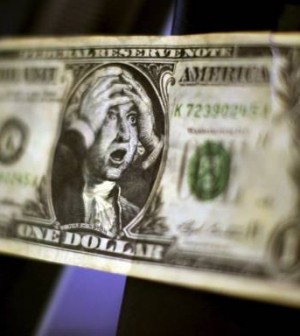 Daar is baie duidelik gevaarligte wat flikker vir die voortbestaan van die Amerikaanse Dollar as internasionale betaalmiddel wat die afgelope 70 jaar ‘n wurggreep op die handelsbehoeftes van feitlik elke ander land gehad het. Met die Bricslande se vordering om ‘n alternatief vir die dollar daar te stel, is dit ‘n ope vraag of veel daarvan gemaak moet word.
As die Amerikaanse dollar nou vervang word met die nuwe grootste ekonomie van China, is dit nie maar bloot die vervanging van een ekonomiese boelie met ‘n ander nie? Dat die verwikkelinge egter ingrypende politieke gevolge sal hê is onbetwisbaar en sal dit dwaas wees om nie daarmee tred te hou nie. Gedagtig aan die oorgrensskakeling van geheime organisasies wat juis die geldmag insluit, sal dit interessant wees om te sien hoe die banke, rentekoerse en algemene finansiële verknegting van die man op straat hierdeur geraak sal word.
Published on Zero Hedge (http://www.zerohedge.com)
Home > Anti-Dollar Alliance Prepares Launch Of BRICS Bank
Anti-Dollar Alliance Prepares Launch Of BRICS Bank
By Tyler Durden
Created 07/14/2014 - 22:58
Three months ago we discussed in detail the growing anti-dollar hegemony alliances that were building across the BRICS countries (Brazil, Russia, India, China and South Africa). Their efforts at the time, to create a structure that would serve as an alternative to the IMF and the World Bank (which are dominated by the U.S. and the EU), appear to be nearing completion. As AP reports, Brazil's President Dilma Rousseff and Russia's Vladimir Putin have discussed the creation of a development bank to promote growth across the BRICS and hope to produce an agreement on the proposed institution at this week's BRICS Summit.
As AP reports, Brazil's President Dilma Rousseff and Russia's Vladimir Putin have discussed the creation of a development bank to promote growth in Brazil, India, China, Russia and South Africa. Rousseff received Putin in the presidential palace in Brasilia on Monday, a day before leaders of the five emerging BRICS nations meet in the northeastern city of Fortaleza. Rousseff told reporters the bank would top the summit's agenda, adding she hoped the event would produce an agreement on the proposed institution. She said the five countries "are among the largest in the world and cannot content themselves in the middle of the 21st century with any kind of dependency."
Brazil and Russia also signed bilateral accords on air defense, gas and education. The leaders who will be present (not so many big fans of the US there)... They seem serious:
• *BRICS DEVELOPMENT BANK KEY TO FOSTER GROWTH IN GROUP: BORGES
• *BRICS BANK AT 1ST TO FINANCE EXCLUSIVELY INFRASTRUCTURE:BORGES
• *RUSSIA'S PUTIN SAYS COOPERATION WITH CHINA IS GROWING
• *PUTIN SAYS RUSSIA TO PROMOTE CURRENCY SWAP WITH CHINA: XINHUA
As we concluded previously, as RBTH reports, it seems the BRICS are not slowing down efforts to create their own IMF-alternative... The BRICS countries (Brazil, Russia, India, China and South Africa) have made significant progress in setting up structures that would serve as an alternative to the International Monetary Fund and the World Bank, which are dominated by the U.S. and the EU. A currency reserve pool, as a replacement for the IMF, and a BRICS development bank, as a replacement for the World Bank, will begin operating as soon as in 2015, Russian Ambassador at Large Vadim Lukov has said.
Brazil has already drafted a charter for the BRICS Development Bank, while Russia is drawing up intergovernmental agreements on setting the bank up, he added. In addition, the BRICS countries have already agreed on the amount of authorized capital for the new institutions: $100 billion each. "Talks are under way on the distribution of the initial capital of $50 billion between the partners and on the location for the headquarters of the bank. Each of the BRICS countries has expressed a considerable interest in having the headquarters on its territory," Lukov said. It is expected that contributions to the currency reserve pool will be as follows: China, $41 billion; Brazil, India, and Russia, $18 billion each; and South Africa, $5 billion. The amount of the contributions reflects the size of the countries' economies.
The creation of the BRICS Development Bank has a political significance too, since it allows its member states to promote their interests abroad. "It is a political move that can highlight the strengthening positions of countries whose opinion is frequently ignored by their developed American and European colleagues. The stronger this union and its positions on the world arena are, the easier it will be for its members to protect their own interests," points out Natalya Samoilova, head of research at the investment company Golden Hills-Kapital AM.
Perhaps the following sums it all up perfectly...
Economists warn the IMF's legitimacy is at stake, and they say U.S. standing abroad is being eroded.
"Eroded" indeed... the BRICS morphing into an anti-dollar alliance...
If the current trend continues, soon the dollar will be abandoned by most of the significant global economies and it will be kicked out of the global trade finance. Washington's bullying will make even former American allies choose the anti-dollar alliance instead of the existing dollar-based monetary system. The point of no return for the dollar may be much closer than it is generally thought. In fact, the greenback may have already past its point of no return on its way to irrelevance.
 SIMON BLACK ON JULY 15, 2014
Exactly 70 years ago to the day, hundreds of delegates from 44 nations were busy at work in Bretton Woods, New Hampshire creating a brand new financial system. World War II had just ended. Europe was in ruin. And since the US was simultaneously the largest economy in the world, the primary victor in the war, and the only major power with its productive capacity intact, it was easy to dictate terms: the dollar would dominate the new system. Every nation would hold dollars as the primary reserve currency, and the dollar would be redeemable for gold at $35/ounce. Also, global commerce would be conducted and settled in dollars, and these settlements would clear through the US banking system.
Naturally this created substantial demand from foreign governments who needed to begin accumulating dollars for trade and reserves. So through a variety of programs, from the Marshall Plan to the IMF and World Bank, the US began flooding the world with dollars. Initially everything went according to plan. But soon the US government realized something important– foreign demand for the dollar was so strong that they could get away with printing more dollars than they had gold. This allowed them to run all sorts of deficits and spending initiatives– more war, more welfare, more waste… all with minimal accountability. Initially the consequences were insignificant.
Sure, the price of gold in London was a few dollars higher than in the US (they called this the ‘gold window’). But demand for the dollar was still strong. So why bother changing? By 1971, the situation had gotten far worse. Another decade of war, excessive spending, trade deficits, and money printing had pushed many foreign nations to their breaking points.
Foreign nations’ dollar reserves far exceeded the US government’s gold holdings. And with confidence waning, many began redeeming their dollars for gold. Only days later, Richard Nixon put a stop to this and unilaterally terminated the US dollar’s convertibility to gold. Think about the magnitude of this decision: Nixon was effectively defaulting on US obligations to the rest of the world– a complete betrayal of their trust. Yet despite this massive shock that reset the global financial system, the dollar somehow managed to remain the world’s #1 reserve currency.
You’d think they would have been grateful, thanking their lucky stars that the rest of the world gave them a second chance. But no. Over the past 43 years, the US has continued to print, devalue, and mismanage the dollar. Along the way, they’ve created epic bubbles and financial shocks. They’ve run up the biggest deficits and debt levels ever seen in the history of the world. They’ve bickered internally to the point of shutting down government. They’ve passed arrogant, painful regulations and commanded the rest of the world to comply under threats tantamount to financial homicide. They’ve unleashed their tax and securities authorities to terrorize anyone doing business with the US. They’ve totally ignored foreign pleas to restructure the IMF and World Bank. They’ve slammed foreign banks with record fines simply for doing business with nations that the US doesn’t like. They’ve waged pointless wars. They’ve spied on their allies. They’ve meddled in other nations’ affairs. And they’ve demonstrated absolutely no willingness or ability to improve.
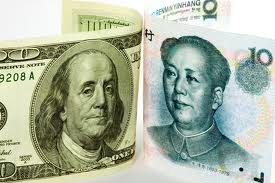
Simply put, other nations are done. Fed up, really. And it’s not just words. Consider that in a matter of months, the US will be overtaken by China as the world’s largest economy. Not to mention, the total combined GDPs of China, India, Russia, and Brazil are roughly the same as the US and EU combined. Just as the US was the biggest player back in 1944, China is the biggest player today. So it seems clear that the renminbi will become a critical component of a new financial system. The renminbi already has experienced rapid growth as a dollar alternative for trade; in May, cross-border settlement surged 52% from the year prior. Renminbi settlement banks are being set up from London to Canada, and the central banks of both France and Luxembourg have signed agreements for renminbi clearing. There have already been numerous Western companies (like McDonalds) that have issued renminbi-denominated bonds. And even the provincial government of British Columbia issued a renminbi bond earlier this year. It was a whopping five times oversubscribed.
I’d expect within the next 2-3 years we’ll start seeing trade settlement in renminbi, even when none of the parties are in China. Today, for example, a transaction between a Paraguayan merchant and a company in Angola will likely settle in US dollars. Soon, I think we’ll start seeing that transaction done in renminbi. And once that happens, you’ll know it’s game over for the dollar. Shortly after, national governments in western countries will issue renminbi bonds (perhaps Greece or Portugal will be first). And eventually, even the US government itself.
Today, 70 years after Bretton Woods, leaders from China, Russia, India, Brazil, South Africa, and several other nations are hard at work in Fortaleza, Brazil creating a new development bank that will compete against the US-controlled World Bank. This is a major step in an obvious trend towards a new financial system. Every shred of objective data is SCREAMING for this to happen. It’s a different world. Everyone realizes it except for the US government, which is still living in the past where they’re #1 and get to call all the shots. The consequences of missing this boat are enormous, and it’s going to be a rude awakening for anyone not paying attention.