Totale besoekerstal
- Artikels vertoon Trefslae
- 10650631
Besoekers aanlyn
Ons het 173 gaste en geen lede aanlyn

|
|
Teken aan
Media
DIS MOS UITERSTE VOORBEELDE,.... DOODSVONNISSE EN DODESELLE, MNR. DE KLERK?
| |  |
|  | Trefslae: 2062
| | Trefslae: 2062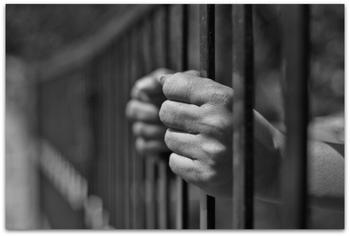 De Klerk sê: Die 1996 Grondwet is vergelykbaar met ‘n politieke doodvonnis vir die regering wat daaraan onderworpe is, met gevangehouding in ‘n politieke dodesel vir dié wat daaraan deelneem.
Voel u of u onder die wolk van 'n doodvonnis leef en dat u deelname aan politieke prosesse in die land, insluitend verkiesings, gelykstaande is aan 'n soort politieke dodesel? Vandag bring FW de Klerk vir u troos. Hy self leef al lankal daarmee saam, al was dit al so erg dat hy al op 3 Junie 1996 in die Parlement verklaar het: “The new Constitution contained no provision in respect of any form of power sharing at the level of Governmental decision making. This was equivalent to a death sentence for even the broadest and mildest concept of Government based on consensus. Continued participation would be equivalent to detention on a kind of political death row.” As woorde betekenis het dan het hierdie woorde ook mos 'n dodelike betekenis vir u en vir my!
Maar wat doen De Klerk toe. Hy sorg dat hy self uit die dodesel ontsnap en hy self die doodsvonnis vryspring. Want op daardie dag het De Klerk uit die regering van sogenaamde nasionale eenheid saam met die kommuniste en die ANC getree. Hy kon eenvoudig net nie meer met 'n galg oor sy hoof saamleef nie.
Inderdaad kan u vra: As De Klerk nie kans sien vir hierdie wolk van 'n doodvonnis waaronder hy moet leef sonder magsdeling en konsensus verskans in die land se grondwet nie, waarom moet u. Waarom die politieke prosesse verduur as dit gelykstaande is aan 'n dodesel? Dis mos uiterste voorbeelde, doodsvonise en dodeselle, mnr. De Klerk.
Wat intussen vir hom dié politieke dodesel meer leefbaar gemaak het, kan oor bespiegel word. Dalk is dit sy rojale Nobelvredesprys se geld, dalk sy gewone Parlementêre aftreefondse, of dalk nog daardie paar miljoen waaroor mnr. P.W. Botha destyds in 'n televisie-onderhoud wat nooit uitgesaai is, gepraat het.
Stel u egter voor: Al vir 17 jaar gaan mnr. De Klerk deur hel op aarde, net deurdat daar in geen opsig voorsiening in die die 1996-grondwet vir magsdeling op hoogste regeringsvlak gemaak word nie. En, het mnr. De Klerk destyds bygevoeg, daardie magsdeling waarna hy smag en wat so noodsaaklik sou wees om die politieke dodesel te ontsnap, moet darem ook voorsiening maak vir konsensus, of op goeie Afrikaans, eenstemmigheid.
Miskien eers 'n woord oor konsensus. Dit was een van daardie towerwoorde wat onder mnr. P.W. Botha in die laat 1970's en vroeë 1980's in die Suid-Afrikaans politieke woordeskat ingevoer is, die groot voorbrandmakers daarvoor die Amerikaners Arnt Lijpardt en die onnimlike Samuel Huntington.
Daar is 'n uiteraard 'n rede waarom hierdie magsdeling en konsensus so gewild in die ou NP gewees het. Met die Kleurlinge en Indiërs in die driekamer-parlement in die minderheid kon hulle met “gesonde” magsdeling en “konsensus” steeds die bewind behou.
Aan die towerkrag van konsensus en gesonde magsdeling het De Klerk en die NP-regering lank geglo, soos blyk uit hierdie toespraak van De Klerk nog tot laat in 1996 toe die 1996-grondwet vir hulle met die strop om die nek in die dodesel geplaas het, die dodesel waarna De Klerk in die toespraak verwys.
As daar nou mense was wat jou tot vervelens toe oor konsensus en sy goeie hoedanighede kon besig hou, was dit ministers Chris Heunis en Gerrit Viljoen. Stoffel van der Merwe is ook een van dié menere.
Hoor u nog enige verwysings deur De Klerk na hierdie towerwoorde? Of deur enige iemand anders daar uit die ou NP? Soos mnr. Pik Botha?
Dis onduidelik of mnr. Botha hoegenaamd ooit aan konsensus en gesonde magsdeling se toorkrag geglo het. Waaraan hy wel geglo het was 'n regering van nasionale eenheid, daardie regering waaruit De Klerk daardie dag en met die opsie dat die NP nog vir die volgende vyf jaar daarin kon dien nog wawyd oop, getree het. Mnr. Botha was uiteraard die hoenders in vir De Klerk, so ook sy seun Willem, 'n vooraanstaande ekonoom, hoekom die seun, kan hierdie politieke waarnemer u ongelukkig nie sê nie.
De Klerk was daardie dag met sy bedanking nietemin nie moedeloos nie, soos Jacob sou hy nog sewe jaar vir Rachel (of Evita) gaan werk. Maar nie in daardie dodesel van 'n Parlement sonder magsdeling en konsensus nie en al sou hy twee jaar afslag kry sou hy dit in die Parlementêre dodesel doen.
Vergewis u maar self in sy toespraak hoe De Klerk vir die NP 'n nuwe identiteit as opposisie sou gaan soek en watter ander twak nie nog nie. Maar van daardie glibberige magsdelingsmodel met sy gemaklike konsensus, daarvan maak hy geen melding in al die toesprake wat hy sedertiden gehou het nie. Want De Klerk het geweet: Hierdie politieke dodesel waaroor hy so gal afgaan, dis waar sy rooi politieke siel rus sal vind. En dit doen hy nou al vir 17 jaar.
Die toespraak 3 Junie 1996:
WITHDRAWAL FROM THE GOVERNMENT OF NATIONAL UNITY
Dit sal vandag die laaste keer wees dat ek in my hoedanigheid as Adjunkpresident, verantwoording aan die Nasionale Vergadering moet doen. Uiteraard vra dit vir 'n kort terugblik oor die afgelope twee jaar.
Oorhoofs is ek trots op die bydrae wat die Nasionale Party se lede van die Kabinet kon maak. Die rol wat ek en my Nasionale Party-kollegas moes speel, was dikwels moeilik maar tog noodsaaklik.
• Gedurende die eerste onsekere jare van ons jong demokrasie, was dit nodig dat alle hoofrolspelers in die politiek mede-verantwoordelikheid aanvaar vir landsregering met die oog op groter sekerheid vir almal.
• Ten opsigte van Suid-Afrika se herinlywing by die internasionale gemeenskap - en meer spesifiek op ekonomiese gebied - was dit nodig om vertroue te bou in die onderliggende stabiliteit van die nuwe Suid-Afrika. Ek glo dat die Regering van Nasionale Eenheid hierdie doelwitte bereik het. En, alhoewel my ANC-kollegas huiwerig mag wees om dit te erken, glo ek dat hulle aan die begin waardering gehad het vir die ervaring wat die Nasionale Party tot die Regering toegevoeg het.
On the whole, the GNU worked well:
• In general, it adopted sensible economic and development policies.
• It helped to promote national reconciliation and nation building.
• The interaction between the different parties often led to better policy formulation and decision-making. 1996-06-03 The FW de Klerk Foundation
• It enabled parties to hammer out consensus agreements on a number of potentially divisive issues.
For all these reasons I am sorry that the ANC rejected our modest proposals for the continuation of some form of institutionalised power-sharing, at executive level, in the new constitution. The simple majoritarian approach that it insists upon is unsuited to societies as complex as ours. The ANC now faces the challenge to deliver on its stated commitment to continued consultation in respect of issues of
national interest. Although the GNU has made an important contribution during the past two years, it undoubtedly had many shortcomings:
• Despite its announced intention of reaching agreement on the basic conventions in terms of which the GNU would function, such agreement was never reached. Because the participating parties never accepted a broad policy framework, every important matter that came before the Government on an
ad-hoc basis carried with it the seeds of potential disagreement and crisis.
• I was not always properly consulted as was required by the constitution.
• Participation in the GNU had a negative impact on the democratic process. Efforts to strike a balance between co-operation and opposition, often led to tension and sometimes to undignified disputes.
The adoption of the new constitution was a watershed in the transformation process and was an appropriate moment for my Party to announce its withdrawal from the Government of National Unity. We did so, without rancour or recrimination. Amongst the reasons for our decision were the following:
• The new Constitution contained no provision in respect of any form of power sharing at the level of Governmental decision making. This was equivalent to a death sentence for even the broadest and mildest concept of Government based on consensus. Continued participation would be equivalent to
detention on a kind of political death row.
• The survival of multi-party democracy, which depends on the existence of a strong and credible opposition, was being threatened by our continued participation in the GNU. The time had, therefore, come for us to reassert our own identity as a strong and vigorous party in our own right. I firmly believe that our choice to do so, is in the best interests of South Africa and all its people. I should like to thank my colleagues in the GNU for their co-operation and goodwill during the past two years. We have proved that South Africans from radically different backgrounds can work together for the common good. I will 1996-06-03 The FW de Klerk Foundation continue to do so, in my new capacity as Leader of the Opposition, whenever the opportunity arises. I should also like to thank my fellow Chairman of the Cabinet and its committees, Deputy President Mbeki, for the positive and constructive role that he played and for his contribution to continuation of a responsible and effective Cabinet system. And I should like to thank President Mandela for the example that he always set in promoting national unity and in building our new democracy.
The three years that now lie ahead before the next election will give all our parties time to develop clear alternative identities and platforms before the elections. It also means that the ANC will have to assume full and sole responsibility for their policies and actions. Although we intend to play a vigorous opposition role on issues where we disagree with the Government, it will be a responsible role. In particular, we will continue to give our whole-hearted support to all efforts to promote economic growth; to alleviate the plight of the poor, the deprived and the unemployed; and to build a
strong, secure and united nation.
However, we will vigorously oppose the Government with regard to the growing number of issues where we disagree. On the economy, we will urge the Government to adhere to the sound policies that
we developed together within the Government of National Unity. We will, in particular, urge the Government:
∗ to drastically reduce the deficit before borrowing, particularly by cutting Government consumption expenditure;
∗ to restore a more healthy balance between business and labour - a balance which was disturbed by the new Bill of Rights;
∗ to promote a more flexible labour system that will be more conducive to job creation and to promoting the competitiveness of our exports;
∗ to continue to open our economy to international competition;
∗ to expedite privatisation; and
∗ to continue with a responsible step-by-step dismantling of remaining exchange controls. We will urge the Government to take vigorous and appropriate action to maintain law, order and social stability:
∗ Enough has been said and written about intentions, plans and strategies to stop crime. The country wants action and wants results. No nation can tolerate a situation where peaceful citizens are attacked and murdered with impunity. South Africa has reached the unacceptable stage where the number of people who are murdered each year by criminals almost equals the total number of people killed in the political conflict between 1980 and 1994.
∗ The Government must come to grips with the on-going violence in KwaZuluNatal. The parties involved must find the political will to settle their disputes through peaceful and negotiated means. Not only does the continuing violence cause unacceptable human suffering and devastation. It has also become a serious impediment to regional economic growth and development.
∗ The Government must handle fragile inter-communal relations with the greatest sensitivity. It must allow all our diverse communities maximum room to develop their cultures on a non-racial basis. Transformation must not become a code word for the imposition of majority agendas on each and every
institution of civil society.
∗ The Government must deal with divisive questions relating to our past conflict with the greatest sensitivity and balance. Recent statements threatening to track down and prosecute perpetrators from only one side of the conflict seriously threaten the young and tender plant of national unity. Such moves
are also irreconcilable with the intention and spirit of the constitution and the historic compromises that brought about our national transformation.
∗ The Government must implement necessary affirmative action programmes in a balanced manner. South Africa cannot afford the loss of experienced managers, teachers and experts to the extent where it will lead to a collapse of standards. We also dare not allow affirmative action to degenerate into a new
form of racial discrimination. Although we are in broad agreement with the ANC on the Reconstruction and Development Programme, I unfortunately have to say that we increasingly disagree with the manner in which programmes are being planned and implemented. On the one hand the Government needs to concentrate on policies that will equip people to help themselves as effectively and as quickly as possible - particularly through the creation of jobs and the provision of practical and effective training
and education. On the other hand the Government needs to provide caring and cost-effective social and health services, with maximum community involvement and with minimum bureaucracy and delivery costs. There must also be cost-effective programmes to extend basic infra-structure services to all, particularly with regard to the provision of clean water, sewage and electricity.